Latest Posts

PADI eCard Available on their Mobile App

padi-ecardPADI recently announced that their mobile application supports downloads of your SCUBA certification card.  How many times have you gotten everything ready for a big dive, you arrive at the dive center, and realize you’ve forgotten your certification card?  While there are a lot of dive locations that aren’t very strict about checking certifications, that is a big no-no and in reality everyone should be asked in order to protect both the divers and the divemaster.  If you don’t want to worry about carrying your card with you anymore, you should check out the PADI app, available for all major platforms, which allows you to store a copy of your card on your phone at all times.  Do it now before you forget!  The PADI app also includes a fantastic directory of dive shops, so you can easily find the closest place to stock up on gear.

Posted in Uncategorized | Tagged , , , , | 1 Comment

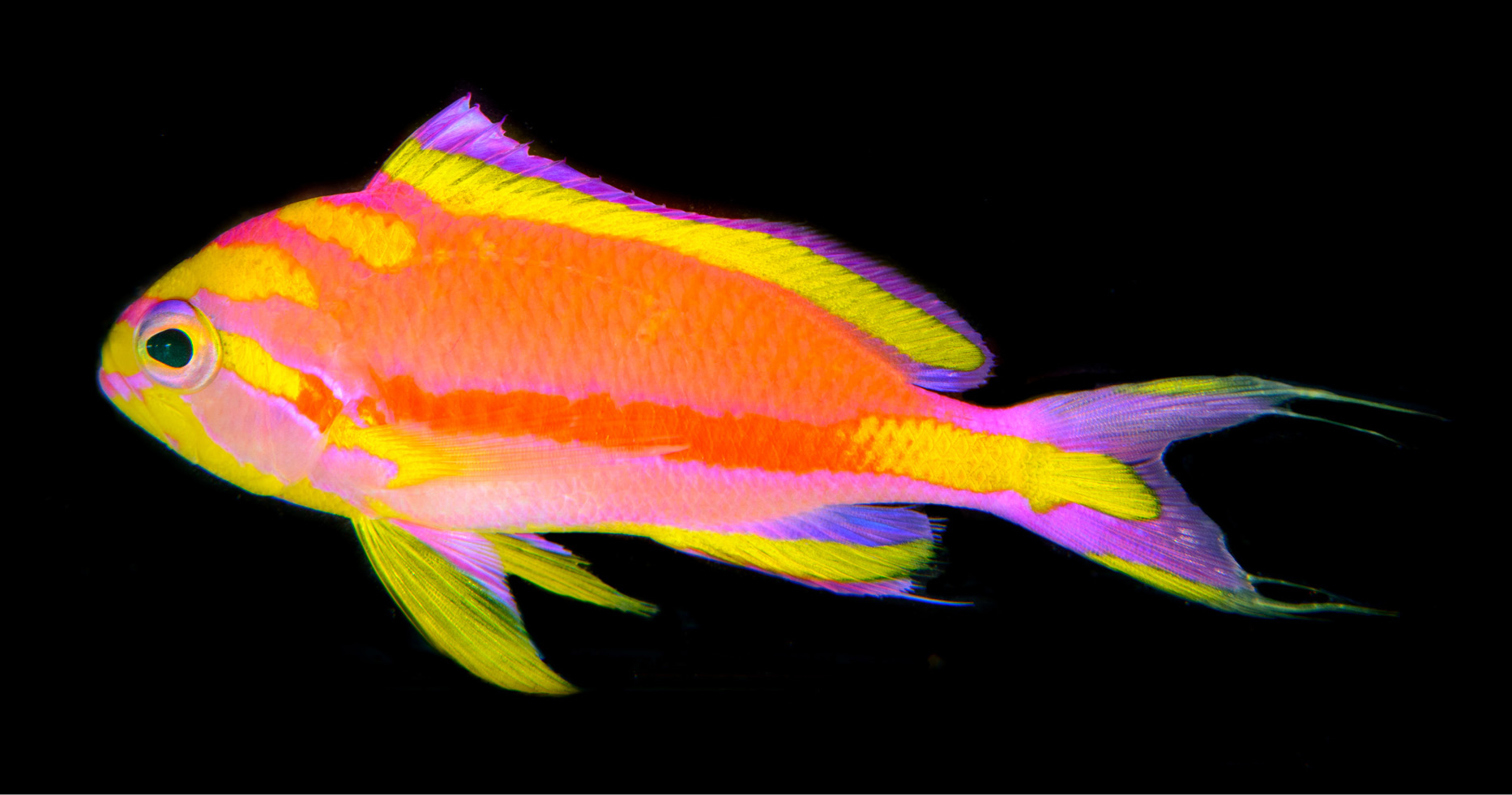
Golden Basslet, Liopropoma aberrans, Eyestripe Bass

 Good morning from the ABC Islands!! I have a real treat for you all today especially for my fish collectors out there. This is the mega-rare, Golden Basslet, Liopropoma aberrans or we call them here, the Eyestripe Bass. Your looking at one of the rarest, most beautiful fish ever brought up from the depths and to date we have only found and collected 10!! This is an adult male, the juveniles are completely yellow with just a faint orange glow on their bellies, as they get older they get more of this beautiful orangish-red color to their bodies. These are found and collected by our new 1000 foot submersible called the “Curasub” at www.substation-curacao.com We find these fish in little caves or parked next to solitary stones, never near the walls. They seem to love areas near sandy slopes or little rubble piles the most and are always found hidden behind rocks most likely so they can ambush prey. This species like other basslets is very shy and solitary, we sometimes will see two in one area but they are always spaced 10-15 feet apart.  They are found at depths between 450 and 800 feet and researchers are thinking there could be two or three different species yet to be found. Once brought to the surface which takes about a week, they are taken into our deep-water lab (it’s very cold in there) and fed live mysis (type of tiny shrimp) which they seem to love. Like other basslets they also feed on just about anything that moves and are very aggressive hunters. So if your reading this and all ready thinking, “I gotta have one”, be prepared to shell out around $6,000!!!  Yes, you read that right, in fact the first one brought up ended up selling for over five figures!!! I have been told that these fish can live a long time and they seem to do well in captivity, they just need plenty of places to hide and lots of live things to eat!! I am off to the sea, we have two sub runs today!! Have a wonderful day, Barry/www.coralreefphotos.com MORE: Golden Basslet, Liopropoma aberrans, Eyestripe Bass

Posted in Conservation, Corals, Fish, Photography, Uncategorized | Tagged , , , , , , , , | Leave a comment

Cyro, The Robotic Jellyfish

 Virginia Tech College of Engineering researchers have unveiled a life-like, autonomous robotic jellyfish the size and weight of a grown man, 5 foot 7 inches in length and weighing 170 pounds, as part of a U.S. Navy-funded project.  Continue reading

Posted in Invertebrates, Science | Tagged , , , , | Leave a comment

Pigment Grafting in stony corals?

resized setosa
This Montipora setosa has developed yellow green pigments believed to have been grafted from a neighboring coral.The branches of an Acropora valida were allowed to come into contact with this Montipora setosa creating a portion of differently colored growth.  The growth continued to manifest into part of the colony and seed fragments from the colored portions have yielded a newly colored coral.  It is theorized that pigment shifts such as these are a result of protein infections as well as pigment grafting but given the circumstances surrounding this colony, I believe it is truly grafted from the Acropora allowed to touch it.

Posted in Uncategorized | Tagged , , , , | Leave a comment

Marine Ornamental Aquaculture Industry Taking Off In Tamil Nadu


The Centre of Advanced Study in Marine Biology (CASMB) of Annamalai University is ramping up production of marine fish for the aquarium trade. Having had a good measure of success raising 10 varieties of clownfish, it has been expanding its operation to offer additional species such as blue damselfish. The centre has been also been providing training for those who pursue a career in the burgeoning hatchery business. This has generated considerable excitement in the area, which has already benefitted enormously from much needed revenues derived from freshwater ornamental fish farming. S. Sivasakthi, proprietor of Vignesh Marine Ornamental Hatchery in Mandapam, purchases clownfish larvae from the centre, which he grows out at his own facility before selling them to local retailers (interestingly, in this particular market, it is the fire clownfish that command the highest price of all). T.T. Ajith Kumar, assistant professor and senior research officer at the centre, hopes to eventually be able to expand its operation to culture fishes in backwater, estuary and mangrove forest sites. While one obvious advantage of having more, successful hatchery operations such as these is that fewer animals will be harvested from the wild to meet demand. Researchers at the centre hope that mass production will confer certain advantages to the consumer as well, such as decreased livestock prices. For more information about CASMB and its research, please visit:
http://india.nydailynews.com/business/6af239bd8e15391f5fd1bcec13b12831/clown-fish-breeding-popular-in-tamil-nadu.

Posted in Uncategorized | Tagged , , , , | Leave a comment

GHL Releases Newer, Bluer Mitras LX 6200 HV LED Fixture

light
When it comes to features and capabilities, there are few LED fixtures that can compare with the GHL Mitras. Even at more than a year old, the sleek looking fixture is still ahead of the game in terms of what all it offers, and it will be years before some of the other LED brands catch up. But GHL isn’t going to sit idly by while the competition closes those gaps. In addition to working on the Mitras LED strip lights, they are also releasing a new model of the Mitras, the LX 6200 HV. Little will change for the new Mitras with regard to the fixture housing or even the overall functionality. Where the changes are coming, however, are the spectra of the LEDs. Due to popular demand, the Mitras LX 6200 HV will shift its color pallet to the bluer side by offering 9 separately dimmable colors. The resulting look has a more intense blue peak, which yields higher PAR values. As for the LEDs, the LX 6200 HV is just oozing with colors. It has12 x Cree XP-E blue, 12 x Cree XT-E cool white, 12 x Cree XT-E royal blue, 6 x Cree XT-E neutral white, 6 x Osram Oslon SSL true green, 6 x Osram Oslon SSL sky white, 6 x Osram Oslon SSL blue white, 6 x Osram Oslon SSL hyperred, and 6 x hyper violet 425 nm emitters. This layout differs from the Mitras LX 6100 HV (aka the original) by ditching the Osram Oslon SSL yellow and red LEDs and replacing them with Osram Oslon SSL sky white and blue white diodes. In terms of pricing, the new Mitras LX 6200 HV will be priced the exact same as its predecessor at $1199. Additionally, upgrade kits can be purchased that will convert your 6100 into a 6200, and those will run $299. MORE: GHL Releases Newer, Bluer Mitras LX 6200 HV LED Fixture

Posted in Uncategorized | Tagged , , , , , | Leave a comment

POTO’s Guide

banner
Our friend Kenny at Pieces of the Ocean has always focused on some of the healthiest and most exciting reef animals, and his latest contribution to the reefing zeitgeist is no different.  Kenny has compiled an incredible selection of images and data on all of these animals, allowing you to very easily find out how to care for some of these creatures.  Since Kenny develops the app in Adobe Air, it is compiled for both Apple’s iOS and Google Android devices.  Oh, and did we mention it is FREE?  Now, what are you waiting for?

Posted in Uncategorized | Tagged , , , , | Leave a comment

Longsnout Seahorse, Hippocampus reidi, Seahorse’s

 Hola Amigo’s, I have a very shy, bright orange, Longsnout Seahorse, Hippocampus reidi for you all today that I found right here on the Sea Aquarium house reef. For most visiting divers this is the Holy Grail of finds but sadly many will leave without ever seeing one. If you want to find a seahorse you have to dive slow, get lower to the reef and look at the base of all sponges and gorgonians, I promise you they are there you just have to find them. This little reef treasure can grow to about seven inches long and can be found in a multitude of rainbow colors. Males are often bright orange and the females yellow, both may be covered in brown or white spots, and may turn pink or white during courtship. They are found in coral reefs and sea grass beds and occasionally in the midwater of the Atlantic from North Carolina to Florida, and from the Caribbean down to Brazil. Males can carry broods of up to 1,000 young in their pouches, with larger males carrying even more young. Of the thousands of longsnouts born in each brood, only one or two may live to become adults and raise broods of their own. In the past, that’s been enough to keep their populations healthy. But today, collectors take tons to dry and sell as souvenirs. The more that are taken, the fewer that are left to reproduce—putting longsnout populations in danger. As with other seahorses, when longsnout seahorses mate, the female deposits her eggs into a special pouch on the male’s belly. The pouch seals shut while he nurtures the developing eggs. Once the eggs hatch, the pouch opens and the male goes into labor giving birth to his tiny young. We had a crazy day here at Substation yesterday with film crews, famous singers and two actors, never a dull moment around here!!  Not much else to report, the rains have stopped and the island is nice and green, the down side is the wind is blowing hard again and the ocean is rough! Have a wonderful day, Barry MORE: Longsnout Seahorse, Hippocampus reidi, Seahorse’s

Posted in Conservation, Corals, Fish, Photography, Seahorses, Uncategorized | Tagged , , , , , , , , , | Leave a comment

Reefs Magazine – Spring 2013 Issue

reefs-magazine-spring-2013
Hot off the cyber-presses, the Spring issue of Reefs Magazine is now live!  The new issue is filled with thought provoking content from both new and familiar voices.  Rich Ross steps away from his usual role as resident reef skeptic to take us along on his impromptu adventure to Kwajalein Atoll in the Marshall Islands. It is a fascinating account of a remote and unique place that few every get to see.  Hobby mainstay Dana Riddle presents real-world light intensity data from the shallow tide pools of Hawai’i.  The conclusions he draws might surprise you. Acropora eating flatworms (AEFW) and other reef pests take center stage in complimentary articles by Dr. Kate Rawlinson (the first to scientifically describe the problematic nasties) and Paul Whitby who focuses on how to detect and control an unfortunate infestation in an a captive system.  James Fatherree introduces us to the beautiful and fascinating world of our most distant relatives-the Tunicates, and finally, Ken Wingerter finishes up his detailed examination of the various species and habits of rotifers.  As a special bonus please check out the Art Gallery where we are featuring the fantastic aquarium themed work of Nate Wilson.  Enjoy!

Posted in Uncategorized | Tagged , , , , | Leave a comment

A Snail’s Babysitter

 Whelks, Anemones, and Sea Urchins I am back to continue with my posting after an unexpected absence due to bodily self-decomposition.  A word to the wise, don’t get old.  Or if you do, don’t let your body know.  It might just not like the process.   Anyway, on with my  tales from the slimy lagoon… In an earlier discussion, I mentioned that aeons ago I saw large female whelks depositing egg capsule masses on one of my research sorties to “my” intertidal study site near Homer, Alaska.  I found this to be very interesting, at the time I was casting around for some research to do, and here a potential easily-done project dropped into my lap. Normally I don’t trust to luck, but I wasn’t about to overtly examine the buccal anatomy of this presentation equine.  I was able to identify the animals, but, at that time, there was no record of them depositing egg capsules in a mass or otherwise.  In point of fact, virtually nothing was known about the natural history of these beautiful whelks, an artifact of being found in an out-of-the-way place where the accumulated knowledge of such critters was minimal.  In fact the only reason I knew the whelks were at this area was that I had taken some students down to the site the previous autumn on a class field trip. Neptunea pribiloffensis whelks on the study beach. The substrate is sandstone, and the “fuzzy” clumps are masses of a feather duster worm which is one of the common prey of the whelks. Figuring that the presence of essentially unknown animals that I was interested in learning about would lead to an easy publication, the following spring I decided to do a little bit of basic research on the snails, and went down to the site to make some field observations as well as to collect a few animals for gut analyses.  Having examined some other Neptunea, including some specimens for this species, I knew I had to look at the gut contents to determine what MORE: A Snail’s Babysitter

Posted in Fish, Uncategorized | Tagged , , , , , , , , , | Leave a comment

Mystic Aquarium Spearheading Efforts to Conserve Horseshoe Crabs

crab 2
The horseshoe crab (Limulus polyphemus) is a close relative to the ancient trilobites. It has changed little since it first appeared during the Ordovician Period, about 440 million years ago. To put things into perspective, it was almost as ancient to the first dinosaurs as those dinosaurs are to modern humans. Throughout their unbelievably long existence they have survived multiple environmental catastrophes. Yet, at present, there are signs that this unusually tough arthropod could soon disappear if steps are not taken to conserve it. Researchers at the Mystic Aquarium are taking a lead in horseshoe crab conservation efforts. The aquarium’s Sea Research Foundation (SRF) has recently partnered with Sacred Heart University (which has already been deeply involved in studies of Long Island horseshoe crab populations). It is also hosting the Horseshoe Crab Watch, an event that gives the general public an opportunity to help SRF and Denison Pequotsepos Nature Center staff count a local population of horseshoe crabs as well as learn more about their natural history and ecology. Continue reading

Posted in Uncategorized | Tagged , , , , | Leave a comment

Trumpetfish, Aulostomus maculatus, Long Fish

 Good morning from the Caribbean!! IF your like me, you just got to work and are just sitting there starring at your computer wondering why your head is spinning and asking yourself, “where did the weekend go”???? It’s like some cruel magic trick, you wait all week for your weekends and then “POOF” they are gone!! I was thinking, we as a human race need to implement a new work strategy, we will all work super hard on the weekends even overtime if needed and then we get the week off, tell me that doesn’t sound better!! My weekend was of course crazy busy again and so much in fact I can hardly remember what I did on Saturday?? Yesterday, Sunday I left the house at 6:30 am on my mountain bike and did a very fast paced two and a half hour ride to the North coast and back, that’s around 35 miles. After that Stijn came over and we found two more different gecko’s in my yard for my “reptiles of Curacao” collection and took them to work to be photographed. After they were photographed we took them all the way back out to the desert and released them in a beautiful spot with lots of old wood. We then met a few friends at Substation and went on a fun reef dive, I spent the whole time just cleaning up the reef and not taking my camera for once. After the dive we worked in my yard getting it cleaned up and finally at 4:30 took the dogs out for a long two hour hike around the salt ponds, talk about a man who was wiped out when I got home!!! So tell me what you all did this weekend for once. Here is a sleek Trumpetfish I found a few days ago and forgot to send it to you all. These fish are everywhere you look here in Curacao! They can be found in electric yellow, blue as you see above and even red, and I am still trying to get all the colors into one photo!! Trumpetfish, Aulostomus maculatus, are long bodied fish with upturned mouths, that often swim vertically while trying to blend with vertical coral, like sea rods, sea pens, and pipe sponges. Trumpetfish occur in waters between 0.5 and 30 meters (1.6 and appr. 100 feet) deep and can grow to 40 to 80 cm (appr. 15 to 31+ inches) in length. They are sometimes locally abundant over coral atoll reefs or in lagoons, where they may be caught even in areas of severe wave action. The spawning habits of the trumpetfish are unknown, but in the region around Madeira, it is known that the females have mature eggs from March to JuneTrumpetfish are closely related to cornetfish. Trumpetfish can be a bit more than 36 inches (3 ft) long and have greatly elongated bodies with small jaws at the front end of a long, tubular snout. The gills are pectinate, resembling the teeth of a comb, and a soft dorsal fin is found near the tail fin. A series of spines occurs in front of the dorsal fin. Trumpetfish vary in color from dark brown to greenish but also yellow in some areas. A black streak, sometimes reduced to a dark spot, occurs along the jaw, and a pair of dark spots is sometimes found on the base of the tail fin. Trumpetfish swim slowly, sneaking up on unsuspecting prey, or lying motionless like a floating stick, swaying back and forth with the wave action of the water. They are adept at camouflaging themselves and often swim in alignment with other larger fishes. They feed almost exclusively on small fish, such as wrasses and atheriniformes,by sucking them suddenly into their small mouths. There is another fish similar to a Trumpetfish called a Cornetfish often mistaken for a trumpetfish. The key visible difference is the tail, pointed “T” in a cornetfish and rounded fan-shaped in a trumpetfish. In the years I have been here in Curacao I have only seen two cornetfish, they are so hard to find and very scared of their own shadows!! Trumpetfish make up the genus Aulostomus of the family Aulostomidae. Have a wonderful day folks, we have the film crew from “Wild About Animals” showing up here soon so I need to get ready!!! Barry MORE: Trumpetfish, Aulostomus maculatus, Long Fish

Posted in Conservation, Corals, Fish, Photography, Uncategorized | Tagged , , , , , , , | Leave a comment
Page 2 of 13012345...102030...Last »

Copyright 2013 Reefs.com