Latest Posts

Sunray Lettuce Coral, Helioceris cucullata, Stony Corals

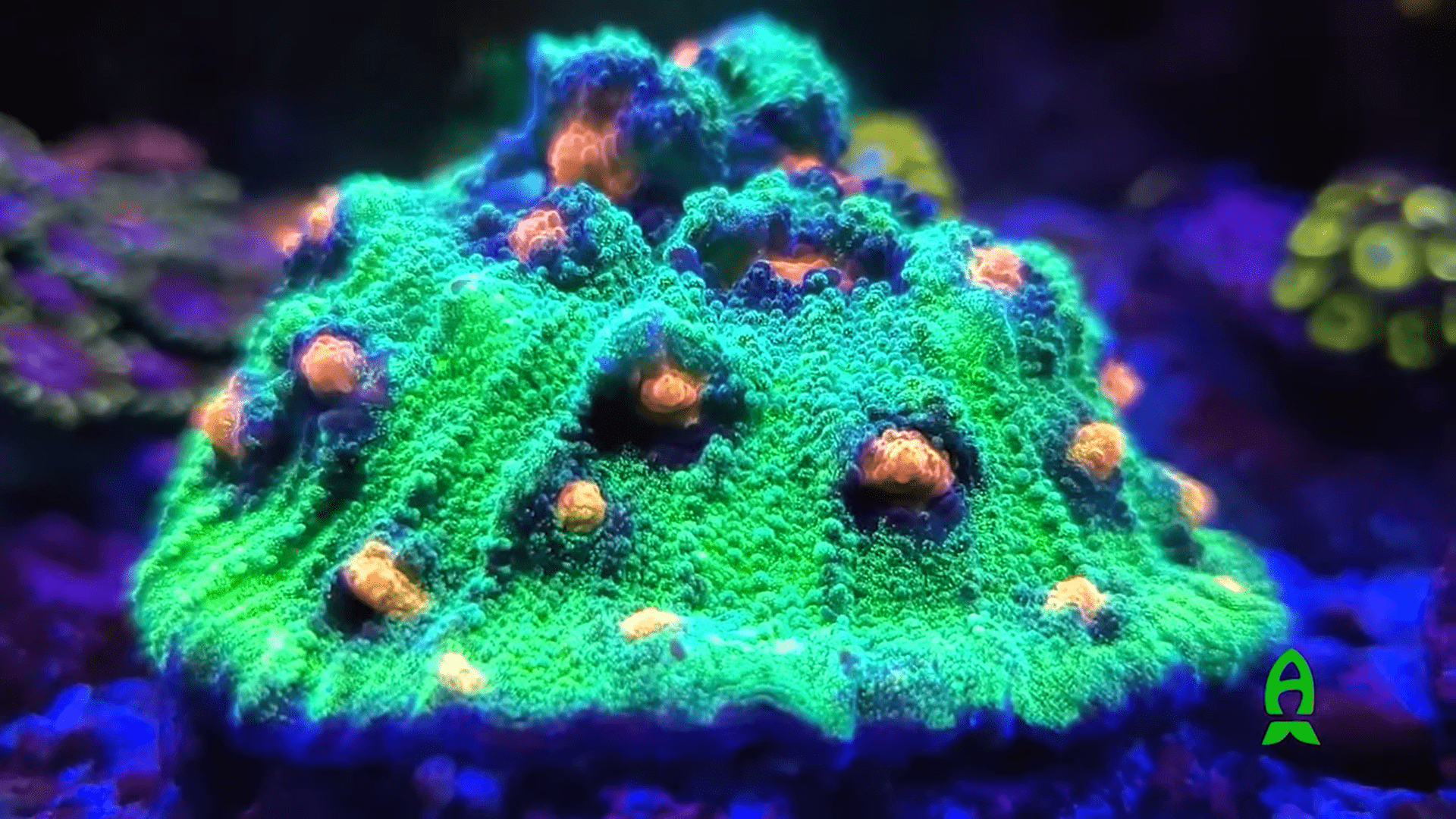
 Hi friends, good news again, it’s pouring rain at this very moment!! Yes, we are finally getting some much needed rains and it’s safe to say our prayers have been answered!! I did a walk this morning at 7:00 with Aimee, the dogs and our friend Mandy and we could see it was pouring on the North coast but it didn’t look like it was going to come this direction, boy was I ever wrong! For the last 30 minutes it has been an all out tropical downpour which is hitting the roof so hard you can hardly hear anything else, lucky Curacao! Today I have a few examples of one of the coolest, most beautiful stony corals on the reef called Sunray Lettuce Coral or Helioceris cucullata for you coral experts out there. Colonies of Sunray Lettuce Coral form thin plates that encrust and contour over the substrate, occasionally with lumpy surfaces as seen above. Colonies edges extend outward from substrate, are often undulated and generally rounded. This coral may also form in overlapping, shingle-like plates like you see in these two photos. With polyps retracted, corallite pits appear in honeycomb pattern. Colors are normally brown, red-brown or even gray with polyp centers white or green, edges of the coral are always lighter. These very fragile corals inhabit sloping reef faces, attaching to and encrusting the rocky substrate. Leaf, plate and sheet corals often form structures with virtually identical shapes and sizes and often grow mixed together overlapping one another. Distinguishing the different species requires close observation of the valley and ridge structure not to mention polyp placement and septa detail, always take a close-up shot if you have a camera. have a wonderful day, I’m headed out to do a dive as it just stopped raining. Barry MORE: Sunray Lettuce Coral, Helioceris cucullata, Stony Corals

Posted in Conservation, Corals, Fish, Photography, Uncategorized | Tagged , , , , , , , , , , | Leave a comment

These are not the polyps you’re looking for

full_13666371029dff1bbf490211a6897757c44b1e9c30_large
Something that sounds like it came out of a science fiction novel, this new Kickstarter concept to build robotic systems to build and repair reefs is a bit out there.  While the possibility of “swarm” technology is useful for aerial drones and other things on land, it remains to be seen whether or not we are close to engineering robots that can navigate a reef structure and place frags without disrupting existing reef life.  Nothing is too out of reach for a Kickstarter campaign though, so if you think this is something you’d like to support and follow, you can get more details HERE.

Posted in Uncategorized | Tagged , , , , | Leave a comment

Goldfish Prosthetics

Fish are often times considered part of the family, like a dog or cat. So in the case of Einstein the Fantail Goldfish the same sentiment was payed towards his inability to remain buoyant or swim. A crippling disease causes some fish to loose their buoyancy as it affects their swim bladder, and most fall victim to the crippling effects of not being able feed themselves or aerate their lungs through swimming. But in the case of Einstein the Goldfish his owner (Leighton Naylor) used some recycled aquarium parts, and a bit of ingenuity, to produce a lifejacket-like device that allows the fish to remain buoyant. The genius lies in the amount of captured gas within the airline pieces; it is enough to keep the goldfish buoyant without sending him racing to surface:  Read more about the story and hear some of Leighton’s comments here!

Posted in Equipment, Fish, Funny, Opinion, Science, Tanks, Too Cute, Uncategorized | Tagged , , , , | Leave a comment

Crazy Zoanthids

5277_589122477773002_2080841733_n
These insane zoanthids just appeared at Detroit Coral Farms.  Name them in the comments section!

Posted in Uncategorized | Tagged , , | 6 Comments

Reef Threads Podcast #129

syphus02'This week we introduce a new podcast series. We’re calling these shows our “Regular Guy” podcasts. We have had several guests in the past, but they are all known people in the hobby, i.e., people who write articles, speak at events, and have their own companies. In our “Regular Guy” shows, we will talk with regular hobbyists, i.e., people who keep and enjoy tanks and are generally passionate about the hobby. In other words, we’re going to talk with the people who sit in the audience at speaker events.
Our first Regular Guy is Brad Syphus, a hobbyist who lives in the Salt Lake City area and has an impressive 400-gal reef system. Brad is a hobby veteran who enjoys collecting rare fish and growing corals of all kinds. We hope you enjoy listening to this podcast and learning more about the involvement of a Regular Guy in this hobby. Download the podcast here, or subscribe to our podcasts at iTunes. Also, follow us on Twitter at reefthreads.—Gary and Christine

Posted in Uncategorized | Tagged , , , , | Leave a comment

“Sneaking” Determined to be Factor in Social Cohesion of Neolamprologus Cichlids


A research team led by Dr. Rick Bruintjes (University of Bristol) has uncovered an interesting reproductive strategy used by subordinate males of certain cichlid species. The team’s work focuses on Neolamprologus of Lake Tanganyika. Neolamprologus often occur in social groups. Typically, these groups include a dominant breeding pair as well as one to fifteen male and/or female subordinate individuals. The subordinates assist the dominant pair in territory maintenance, in territory defense and even in the care of the pair’s brood. If it were so that members of these social groups tended to be related, the reproductive benefits (however indirect) conferred Continue reading

Posted in Uncategorized | Tagged , , , , | Leave a comment

Gorgonians, Octocorals, Knobby Sea Rod, Polyps

 Good morning from wet Curacao! It’s amazing how quickly things change, we went from drought conditions to constant rain in just under a week!! I did notice on our bike ride last night that because of how dry it was the water is just disappearing and soaking right in, I am hoping it continues. I have a close-up shot of a common gorgonian called a Knobby Sea Rod for you all today. I always tell divers here to slow down and stop for just a minute and look carefully at any given gorgonian so you can see the thousands of tiny polyps protruding out from the arms. Gorgonians is the preferred name for this large group of octocorals; however, they are commonly called “soft corals” because of the colonies “lack of hard, rigid, permanent skeletons”. The common name soft coral should be used when referring to members of the family Nephtheidae, abundant in the Indo-Pacific. Gorgonians include the animal colonies known as sea rods, sea whips, sea feather plumes, sea fans and orange sea whips. The stems and branches of all gorgonians have a central skeleton or axis. The central core in the suborder Scleraxonia is composed of either tightly bound or fused calcareous spicules. A wood-like core typifies the Suborder Holaxonia. The core is surrounded by gelatinous material called the rind. Polyps (above) are embedded in the rind and extend their tentacles and bodies from surface openings called apertures. The arrangement of the polyps (in rows, alternating bands, randomly scattered, ect.) is often helpful in the identification process.  I am off to explore and photograph the underwater world, I hope you all have a great day and a wonderful weekend! See you soon, Barry/www.coralreefphotos.com MORE: Gorgonians, Octocorals, Knobby Sea Rod, Polyps

Posted in Conservation, Corals, Fish, Photography, Uncategorized | Tagged , , , , , , , , , | Leave a comment

Bottom Feeders

mary-3
Check out these great pieces of art created by Mary O’Malley.  The series, titled “Bottom Feeders” combines porcelain dishware with underwater animals including octopuses, starfish, mussels, corals, urchins, and more.  There are a large number of different pieces in the exhibit, so check them all out over HERE.

Posted in Uncategorized | Tagged , , , , | Leave a comment

New Explanation for Why Pulsing Corals Pulse


The distinctive motion observed in members of the family Xeniidae has for long amazed marine aquarists and marine biologists alike. Arguably, a sizable colony of vigorously pulsating xenia polyps is an exceptionally beautiful sight to behold. However, the reason that this peculiar behavior benefits the animal has yet to be entirely understood. For one, the energy expenditure involved in the activity is immense. To note, this pulsing cannot be attributed to predation or filter feeding, as these species are nourished almost entirely by their zooxanthellae. A recent study conducted by scientists from the Hebrew University of Jerusalem and the Technion-Israel Institute of Technology may help to explain the strange behavior of these unique soft corals. Working in the coral’s natural habitat, researchers measured the field of water flow around Heteroxenia during pulsation and during rest. They found that even though individual polyps did not pulse in synch with others in the colony, the overall effect of the movement drew water up and away from the coral. The apparent result was an efficient Continue reading

Posted in Uncategorized | Tagged , , , , | 1 Comment

Mr. Saltwater Tank TV Friday AM Quick Tip #122: Keep The Moisture Out Until You Need It

A saltwater tank is some parts water and some parts salt.  Mixing the two prematurely though can make your salt mix lumpy or turn your salt mix bucket into a slab of concrete.  While separating the two seems easy, I found a trick to help me keep the two apart. Links in this show: www.MrSaltWaterTank.com/site/silica/ MORE:Mr. Saltwater Tank TV Friday AM Quick Tip #122: Keep The Moisture Out Until You Need It

Posted in Corals, Equipment, Fish, Uncategorized | Tagged , , | Leave a comment

ORA Green Planet Acropora

greenplanet_lgORA announced a new coral today on their website, and judging by the name, it’s going to be a very popular one.  The Green Planet has a very similar growth pattern to the famous Red Planet, and it also shows shades of white in areas of new growth.  Just like the Red, the Green is a densely tabling acropora with very bright colors.  This new coral will be available in your LFS in the coming months.  Who will be the first person to grow out the Green in the middle of a big patch of Red?

Posted in Uncategorized | Tagged , , , , | Leave a comment

Urchins evolve to deal with climate change

529552661_4fcffc13e3_z

credit: amerune

 As the oceans become more acidic, many marine animals will have a harder time extracting the calcium from seawater that they need to build their skeletons. Marine biologists fear an ecological catastrophe could be imminent unless animals evolve to take up calcium more efficiently.  Continue reading

Posted in Conservation, Invertebrates, Science | Tagged , , , , | Leave a comment
Page 7 of 130« First...56789...203040...Last »

Copyright 2013 Reefs.com